
Bitescize is our series of interviews, where top academics and practitioners will be answering our
questions on #behavioralscience, #misinformation and #strategiccommunications.
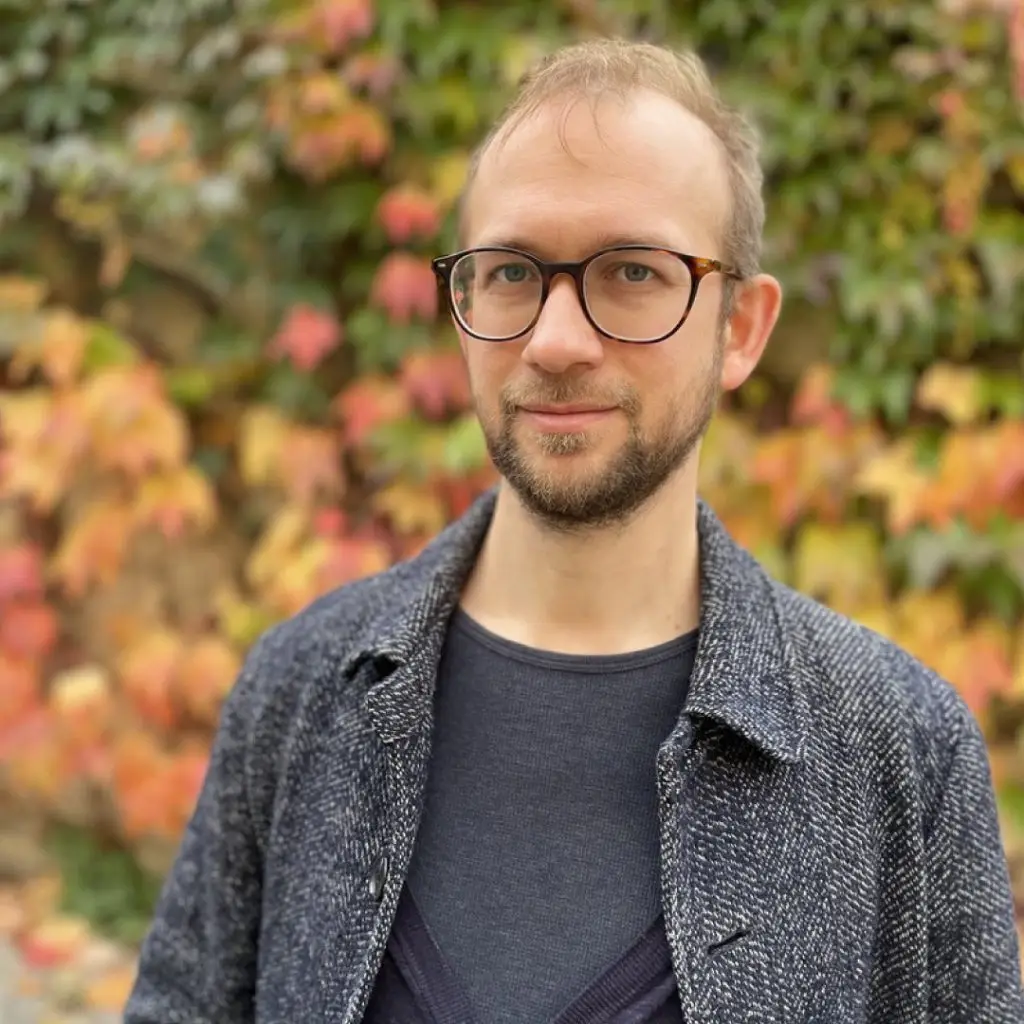
This week we talked to Jens Koed Madsen, who is an Assistant Professor at the London School of
Economics and Political Science, and a member of COHESYS group at the University of Oxford. Jens
told us about his work on understanding the processes that lead to people holding different beliefs, and
how this influences our understanding about how to tackle misinformation effectively.
Who are you?
My name is Jens Koed Madsen. I’m an assistant professor in cognitive psychology at the
London School of Economics and Political Science. In my work, I’m interested in how people
form their beliefs and understanding of the world and how this may influence (or not) how
people behave and respond to interventions. I am particularly interested in information systems
as well as environmental sustainability.
How did you get into Behavioural Science?
It was a gradual process – my undergraduate degree is in Rhetorical Theory (the art of
persuasion studied in Humanities). This sparked an interest in how people see evidence,
process arguments, and to what degree they use this to influence their behaviours. Via cognitive
psychology during my PhD at UCL and first post-doc Birkbeck, I eventually became interested in
how people’s subjective understanding of the world may impact behavioural modelling. For
example, during my time at the POSEIDON project at Oxford, where I worked on fisheries and
sustainability with colleagues from biology, economics and more.
One of the things I appreciate a lot about my department at LSE is the interchange between
foundational theoretical questions (e.g., can we model belief revision using Bayesian
computational models) and what this means for application (e.g., what does it mean for
intervention design if people are Bayesian reasoners). The department’s mantra is ‘from the lab
to the world and back again’, which I think is a lovely way to work. So, I went gradually from a
pure humanities exploration of persuasion via computational modelling during my PhD to now
where I work with an interchange between computational models, qualitative interviews, agent-
based modelling, and theory to explore how people form their beliefs about the world and
when/if/how much this influences their behaviours.
What are you working on right now?
I’m working on different projects, but as an example, I am working with Lee de-Wit and David
Young from the University of Cambridge on belief revision and polarisation. We are working on
a model that describes people’s beliefs about dependencies (i.e., when people see reports from
multiple people, it matters a lot if they believe these sources are related to each other, they
make use of the same data, or have some structural biases that influence how they interpret
information). Our initial results are promising, which is intriguing, as it suggests that some part of
polarisation may be explainable via rational processes.
What do you like most about what you do?
There are many wonderful things about the role of an academic – engaging with clever
students, meeting and collaborating with interesting colleagues, writing papers, and more. One
element of my work that I never take for granted is the freedom to pursue projects that I
personally find interesting.
What role is there for communications in changing behaviour?
I think this very much depends on the behaviour in question. If the behaviour is deeply rooted in
your beliefs about the world, information campaigns and communication is naturally going to
matter a lot. For example, some studies show the influence of misinformation with regards to
COVID-19 vaccination as well the role of subjective beliefs in intentions to take vaccinations.
However, for other behaviours, it matters a lot less what you believe. For example, my personal
beliefs about the upcoming presidential campaign in the USA matter very little, as I am ineligible
to vote. In that case, the link between belief and behaviour is tenuous at best. As for many
cases, I don’t think there is a one-effect-size that covers all behaviours but that it is incredibly
topic-dependent.
If you could work on / research any topic what would it be and why?
One of my big interests at the moment is to explore the theoretical, computational, and empirical
challenges in marrying freedom of speech and healthy information systems that diminishes the
impact of malevolent disinformation while allowing for earnest disagreement. I think this is a
central question for many democracies and it is not a trivial issue to understand how to structure
democratically beneficial information systems.
What is your favourite behavioural science paper/book/resource and why?
There are of course numerous that I could have chosen, but I’ll name three books that have
influenced me in different ways throughout my academic career. Aristotle’s Rhetoric because it
illustrates the complexities of persuasion beyond simple information transmission theory.
Bayesian Rationality by Nick Chater and Mike Oaksford because it showed me how subjective
probability calculus can be used as an empathetic approach to exploring why some people
respond differently to the same message. And Complex Adaptive Systems by Scott Page and
John Miller for discussing how complexity theory can be integrated within computational social
sciences.
Behavioural science looks at misinformation from the lens of human behaviour. What is
one step we can take to protect ourselves from the impact of misinformation?
There are a few – one prominent approach is simply to educate ourselves more to be aware of
the techniques that people use to misinform. This comes from people like Sander van der
Linden, Jon Roozenbeek, and others who are developing interventions akin to media literacy
and critical reasoning skills. The goal here is to train yourself to spot persuasive techniques that
are often used in misinformation so that you are less swayed by these in the future. Individual-
based interventions are probably not sufficient by themselves, but being more aware that
misinformation may reside in your own media consumption and being mindful of these
techniques are good starts. People seem to believe that misinformation is a problem for other
people, so self-reflection is a welcome element.
What is the role of communications in tackling misinformation?
As above, I suspect this depends a bit on the misinformation in question and when in the
information process you are. That is, misinformation about historical facts (e.g., holocaust
denialism) may require entirely different strategies than misinformation pertaining to current
debates (e.g., climate change denialism). I think we may need more community- and trust-
building to supplement information campaigns, as information alone is insufficient if the
recipients believe you are untrustworthy or in collusion. That is, I think we need a better
understanding of the process of reasoning and information search to build better and tailored
interventions.
Who do you think is interesting in the general field?
Within the field of reasoning and computational modelling of information and communication, my
PhD supervisor Nick Chater is a stellar researcher. His approach to reasoning and
communication has influenced my thinking a lot – to take a process-oriented view that seeks to
explore how and why people may reasonably disagree despite having access to the same
information rather than just looking at output-oriented models that may explore the fact that two
communities of peoples disagree rather than exploring possible reasoning strategies that may
engender this disagreement.
What haven’t we asked you that we should have?
There are different things to consider, but one is how we can foster a more productive
relationship between researchers, governments, and media outlets/social media platforms to
foster a health information environment that allows for dissent, disagreement, and satire, but
which simultaneously diminishes the roles of malevolent disinformation or deliberate hoaxes
designed to divide or profit from bogus products.
Who is one person that we can speak to for our next interview and if you could ask them
one question, what would it be?
Jon Roozenbeek from Kings College, London would be a great person to interview, as I really
appreciate his view on combating and engaging with misinformation.