
Bitescize is our series of interviews, where top academics and practitioners will be answering our questions on #behavioralscience, #misinformation and #strategiccommunications 👀.
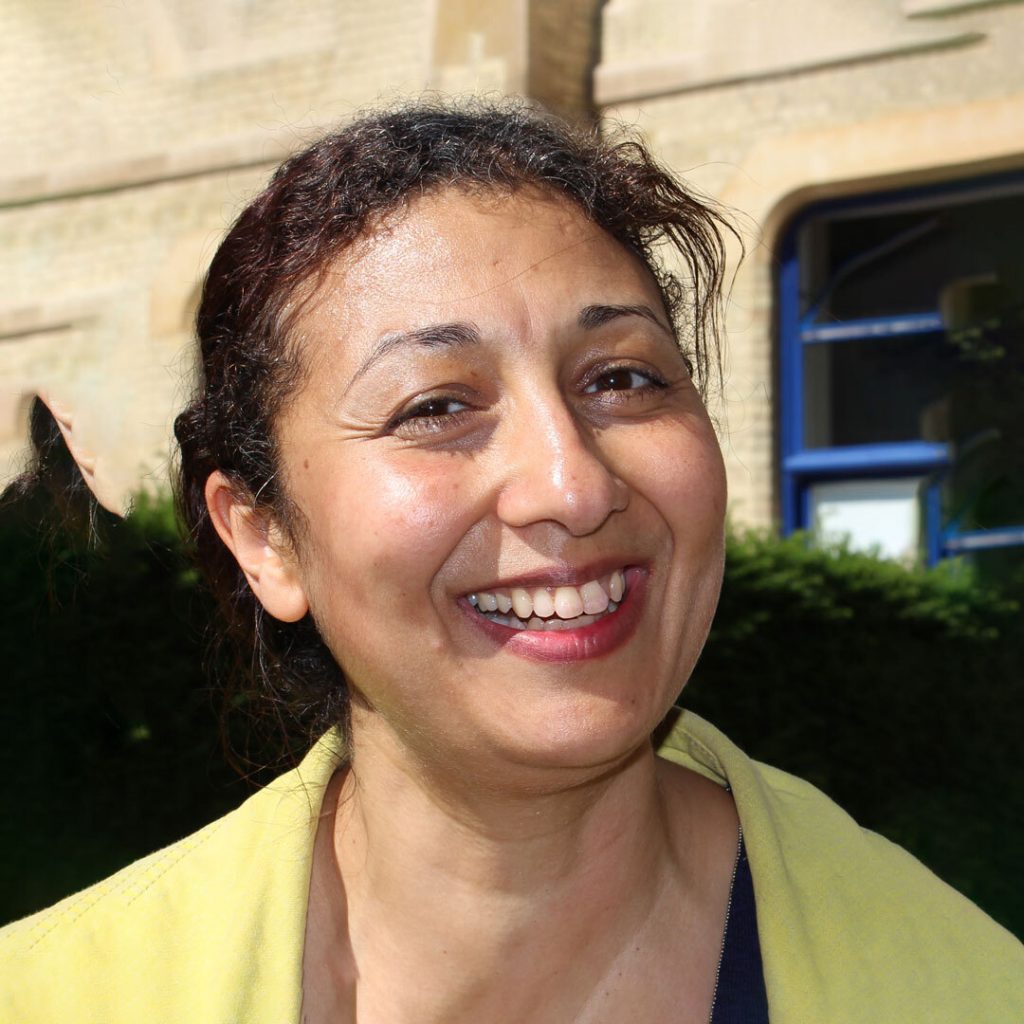
This week we talked to Magda Osman, who impressively heads the Research and Analysis Centre for Science and Policy at the University of Cambridge and is also a Professor of Policy Impact at the University of Leeds.
Who are you?
I am a cognitive psychologist, though am variously referred to as a decision scientist or behavioural scientist. I hold a position as Principal Research Associate in the Judge Business School, University of Cambridge and Prof. of Policy Impact at Leeds Business School, University of Leeds.
How did you get into Behavioural Science?
I started to read books on psychology when I was quite young. That isn’t to say I had an amazing grasp of what I was reading, just that I was inspired by what I read and knew then that I wanted to make a career as a researcher in the area. My second big interest while I was studying for my degree in experimental psychology was philosophy of science. I’m still very much a tourist, but at the time, and till now, it has helped shape how I think about the limitations of measurement and how to remain productively skeptical.
What are you working on right now?
Because of my interest in uncertainty, I look at ways of extending it into the domain of risk analysis. I have been focused on understanding how practitioners can best interpret statistics to inform risk assessment and management in different applied domains. The other area of work that I am now concentrating on is how to improve the way decisions are made in groups. There are lots of problems generated from group dynamics that end up stifling the type of productive disagreement that can support good decisions. My efforts, along with the people I’m lucky to work with, is to examine how to help achieve quality decisions through the integration of diverse viewpoints. Finally, I have revived one of my main all time interests which is the relationship between manipulation and free choice. The focus for me is to understand how people make sense of different types of manipulative tactics on their choices. There are times when we treat manipulation as benign and other times as threatening to our ability to freely choose. So the question I am focused on is what predicts the difference.
What do you like most about what you do?
The thing I like most and find the most challenging is characterising a problem in the most accurate way possible. Thankfully I have a lot of clever people around me that I trust to help me do this, so I enjoy the collective effort in figuring out the right empirical questions to ask.
What role is there for communications in changing behaviour?
It depends what context and what behaviour one is interested in changing. There are different channels for communicating, different motivations behind the communication, different types of relationships between the sender and receiver of a communication and so on. So, to understand what role communication has, or should have, in influencing behaviour, also invites questions around ethics. There is no way of escaping the topic of ethics because what behaviour the communication is designed to change depends on the end goal and who is ultimately benefitted from the change in behaviour.
If you could work on / research any topic what would it be and why?
I am lucky that I can look at questions from a basic science perspective, and then complement that with an applied science perspective. Rather than wondering what things I could research on, I am often steered by real world problems that people come to me with. I think this is the most difficult thing I end up doing, not least because there is pressure to make sure that the translation from the lab to the wild needs to be precise to ensure that what is being proposed is relevant and useful.
What is your favourite behavioural science paper/book/resource and why?
The most profound book that I read and keep going back to is The Hidden Persuaders by Vance Packard. It was written in the 50’s and discusses the way psychology was used in marketing, advertising, and political campaigning at the time. It helps to put in context some of the issues that the discipline still faces today.
Behavioural science looks at misinformation from the lens of human behaviour; what is one step we can take to protect ourselves from the impact of misinformation?
I’d say that the study of misinformation, disinformation and other variants such as fake news and deep fakes integrates work from several disciplines. This means that psychology doesn’t approach the topic in isolation, especially when thinking about how to apply insights to the real world.
So, to the question, unfortunately the unsatisfying answer is that it depends on what context we are encountering distortions and inaccuracies in the information we are presented. In some cases, we already expect that there are things we will come across that are problematic, so we tend towards being skeptical or suspicious. This is already a form of protection. However there are many problematic areas where psychological science can help, especially when it comes to preparing younger adults in basic critical analytic skills which are essential in most walks of life.
What is the role of communications in tackling misinformation?
We still have a long way to go. On a more basic level over the past 50 years the definition of misinformation has changed, so knowing how to tackle it requires some basic agreement on what it is. I have been focused on looking at how people view it and what their own experiences are when they encounter it. The interesting thing is that people have a variety of strategies they use, such as humour, sarcasm and irony as a form of error correction. The most illuminating of the strategies which I have found, and which signals me to what people appreciate a lot, is the opportunity to have open debates. There is a lot of rich information that can be drawn from the mechanisms people use to detect aspects of communication that they view as misinformation, and so this can be a good basis for knowing how to tackle it.
Who is one person that we can speak to for our next interview and if you could ask them one question, what would it be?
There is more than one. Matti Vuorre. He is at Tilburg University. He is doing some great stuff that challenges what we assume about online/virtual environments and the impact it has on us psychologically. I’d also suggest talking to Sarah Jenkins. She is at Leeds Business School. Her work on risk communication helps to highlight the pitfalls in the way crucial statistical information is communicated and how to address the pitfalls in practical ways. Wim De Neys. He is at the Sorbonne. His work on reasoning is fascinating as well as pioneering, and he has a lot of interesting things to say about how his research applies in complex everyday problems.