
Who are you?
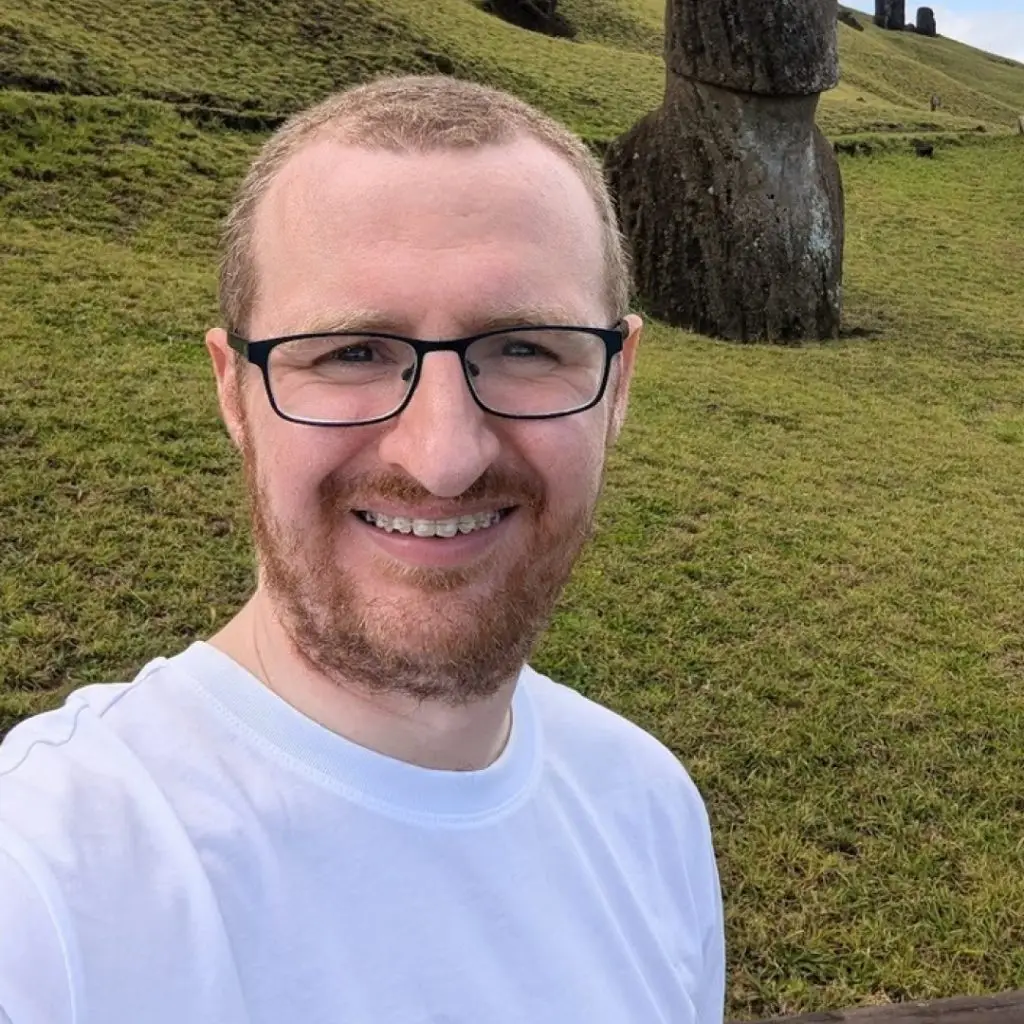
My name is Dr Michael Hattersley. I’m from London, United Kingdom. I’m a postdoctoral researcher in Psychology at the Slovak Academy of Sciences in Bratislava, Slovakia.
How did you get into Behavioural Science?
As a child, I was diagnosed with Asperger’s Syndrome. During my high school years, I was treated differently by other kids and I never really understood why. So, I gradually got into reading about psychology as a way of trying to understand that, and to understand that part of myself better. At 16, I got the chance to study Psychology directly, as part of my school curriculum. I did not find as many answers about myself as I wanted, but I did encounter psychology as a science and as a way of asking questions about how people work. I have been hooked ever since!
What are you working on right now?
Right now, my main research focus is on the psychology of belief in conspiracy theories. In particular, I am focusing on how people who hold such beliefs interact with and use new information.
Most of my past work has looked at the quantity of information. Imagine, for example, that you’re planning a trip, and you find a hotel that you think you like, but you opt to check the reviews and decide “Yes or no”, based on what they say. But there are over 300 reviews for this hotel and you’re not going to read them all, right? The question is how many you want to read. Maybe you read just a few. Or perhaps you go for 15 to 20. Or you could be more moderate, 8 to 10. How many reviews until you decide to take or pass on the hotel? How many units of data do you need to form a conclusion?
This is what we have measured in relation to people with conspiracy beliefs using sampling games. So far, we’ve found that people who believe in conspiracy theories rely on smaller samples of data when choosing a conclusion. Now we’re moving beyond that to see under what circumstances that finding holds or breaks. Does it hold cross-culturally, in different information environments? Does it hold when we directly manipulate the quality of information? These are important questions, because changing people’s minds about conspiracy theories will ultimately require giving them information in some form. So, it is useful to have a baseline on how such people use information in the first place.
What do you like most about what you do?
There is always room to be creative. For one, whatever your interests may be, if you can come up with a question to ask about it, then you can almost certainly run a study on it. Naturally, that is how my field started, because at some point somebody said, “hey, what are the correlates of belief in conspiracy theories?”. That seems like an obvious question now, especially since 2016 when the Brexit referendum and the election of Donald Trump illustrated just how pernicious misinformation can be, but in the 2000’s and the 90’s, it was less so. For another, once you get beyond the questions you are interested in, you also have a lot of flexibility with methods. And then, you have even more room for flexibility with your interpretations, if you have ideas then they will get space to develop. In both questions and answers, the idea space is enormous and there is a lot of room for independent thought.
In that sense, it also helps that I am part of a developing topic of research. The psychology of conspiracy theories is a relatively young field, most research and insights have come in the past 20-30 years or so. This means that there is still lots of room to explore and try new things.
What role is there for communications in changing behaviour?
I think that communication plays a huge role. Most ordinary people usually interact in good faith with the information they are provided. Of course, that is not true for everyone: some people interact with the data in bad faith for personal gain. Others might be incapable of interacting appropriately with the data due to cognitive or psychiatric impairments. But most ordinary people interact in good faith with the available data, and this means that their beliefs and in turn their behaviours are ultimately a consequence of the information environment they are in.
Where this becomes problematic is that information environments differ wildly from society to society, culture to culture. Put bluntly, sometimes the information environment is just poor, and in those cases, people’s beliefs and behaviours are going to reflect that and this will cause problems. Think of someone who grows up in a fundamentalist Christian household in the rural US, someone who never leaves their state. Maybe nobody in your neighbourhood or school believes in evolution, and some might even say with a straight face that the Earth is flat. If that’s the information you are working with, then the rational response is to believe—wrongly—that evolution is a myth, because that conclusion maximises the likelihood of the information you have.
For a more global example, consider Russia, a country which maintains an iron grip on its media. If your main source of news and information about the world was Russia Today, then all your information will be pro-Putin and anti-West. People who are rational and interact with their information in good faith will nonetheless end up believing in bad things, because of an impoverished information environment.
So, it is vital that we get communication right, that we give people good information, communicate it clearly, and also that we equip people to know how best to use information.
If you could work on / research any topic what would it be and why?
Other than my current topic, of course, I would have loved to dive into political science more generally. Naturally, my research topic brushes up closely with politically relevant phenomena, especially in recent years, but I have always come at that from a social cognition perspective. I would have enjoyed some more direct contact with political science and with variables like actual voting behaviour.
Another topic that I love reading about is the psychology of religion. This was one of my earliest research interests and I even did my M.Sc. project on the evaluation of religious arguments (vs. non-religious ones). Initially, I was going to do my Ph.D. on religious cognition, but I ended up studying conspiracy beliefs instead. Nonetheless, it’s an exciting topic that I have some unfinished business with, and I would love the chance to return to it one day.
What is your favourite behavioural science paper/book/resource and why?
Tough to select just one! But one book that was a big influence on my thinking—especially as a Ph.D. student—was The Mind Club by Daniel Wegner and Kurt Gray. I love this book for two reasons. The first reason is simple: I quite like the content! I think it tells a nice and parsimonious story of moral judgement. It is quite accessible for lay readers and easy to understand, and it connects very well with real world phenomena. The book and its underlying theory have their critics and are not perfect, and there are popular alternatives (e.g., Moral Foundations Theory), but I think the general principles are sound.
The second reason I love this book is that it inspired me as a behavioural scientist to engage in more theory. Empirical data is necessary and obviously a defining pillar of science, but if you want to translate that data into real-world impact, then you need theory, an idea, a “How?” and a “Why?” to accompany the “What?”. That can be hard to do: empirical work feels more secure because your numbers are right there, your effects are significant. But theory involves putting your thoughts and ideas out there, which means you could be ripped to shreds. I have encountered some colleagues with this “theory-phobia”, poo-pooing on other theories for being the stupidest thing on the planet.
But they never wanted to put forward alternative ideas, perhaps because they feared the same ridicule that they dealt out to other theories, so they stayed in their comfort zone. But imagine if Wegner and Gray had been as reluctant with their own theory. Imagine if those ideas never made it out of their lab. Agree or disagree with their ideas if you want, but we are still better off for having those ideas out there in our collective intellectual space. At worst, it was a bad idea that might inspire a better one, and at best it is a damn good theory. This book inspired me to do the same with my own “Overfitting” account of conspiracy belief, and to be a little less risk averse with my own ideas, instead of playing it safe.
Behavioural science looks at misinformation from the lens of human behaviour. What is one step we can take to protect ourselves from the impact of misinformation?
I will give you two steps. Firstly, do not underestimate how pervasive these beliefs can be. Conspiracy theories and misinformation are not unique to extremists, people with low intelligence, or people with psychiatric disorders. They are geographically, historically, and socially widespread, and even ordinary people can fall prey to them. Do not make the mistake of assuming that you are immune.
Secondly and perhaps more importantly, look after yourself! Specifically, look after your mental health. Always good advice for many reasons, but for the purposes of this discussion, it is also a good defence against misinformation and conspiracy theories. Such claims are most appealing to us when we are not doing very well. We all go through tough times in our lives, we all sometimes get scared or upset or afraid. In those moments, misinformation and conspiracy theories are like the “Miracle Cure”, the “epistemic snake oil” which falsely promises to explain away all your uncertainty, only to leave you with more.
The importance of mental health is even more strongly illustrated when you look at the profile of a person that is attracted to conspiracy theories. Anxiety, depression, and psychosocial stress are all positively correlated with endorsement of conspiracy theories. People are also often attracted to conspiracy theories during hard times, such as during bereavement or job loss. The pattern is fairly clear: people are attracted to these ideas when they are not doing so well. And that makes sense. To me, people who believe conspiracy theories never really strike me as the happiest of people, and I worry that it makes them prime targets for misinformation and conspiracy theories. Look at Alex Jones as an example: have you ever seen him genuinely happy? Seems to me that he’s always angry and always shouting! Use your indoor voice, dude.
So, take care of yourselves! Go for a walk, try meditation, see a therapist or talk to a friend or family, make sure you are sleeping enough… and you will find that there is no need for the misinformation to fulfil.
What is the role of communications in tackling misinformation?
As I said earlier, communication is vital because ultimately, people can only work with the information that they are given. So, it’s important to ensure that people are given clear and digestible information. This is especially true in countries like Russia, where the information environment is rigidly controlled and where it may be as simple as making the facts available.
But in cultures like the UK, USA, Germany, it gets more complicated: the facts are already available and accessible to people. People are believing conspiracy theories despite the facts. The issue is not too little information but too much: social media bombards people with conflicting conclusions all the time. For every factual argument you make that climate change is real (for example), there will be another 2 or 3 counter arguments suggesting that it is a hoax. Eventually, the facts get shouted down. So, it is not just about combating lies with truths, but about equipping people to tell the difference themselves.
To that end, basic information literacy is hugely important. People need basic training in things like fact checking, source evaluation, attention to fallacy, and so on. There is some great academic work in this space on what researchers call “prebunking”: instead of arguing directly against the conspiracy theory or fake news, you pre-warn people about misinformation. For instance, you might tell people about the nefarious motives of people (e.g., oil companies, the Kremlin) who want you to believe in misinformation. Or you might draw attention to the specific style of poor argumentation used by such people (e.g., when anti-vaxxers wheel out a fake doctor to talk about the dangers of vaccines). You could argue similarly with basic scientific literacy, too (e.g., teach people about hypothesis testing, the importance of evidence, expert endorsement), as well as economic literacy (e.g., how money works) or political literacy (e.g., how your country’s political system works). That way, when we say for example, “the evidence overwhelmingly supports the efficacy of vaccines”, that argument actually gets heard and understood.
Who do you think is interesting in the general field?
Within the study of misinformation, Sander van der Linden at Cambridge is doing interesting work on interventions against misinformation, including in relation to prebunking. His recent book “Foolproof” is a great read as well, I would highly recommend it. In relation to conspiracy theories, Jan-Willem van Prooijen in Amsterdam is worth checking out, for anyone interested in that topic.
What haven’t we asked you that we should have?
Perhaps one thing I could mention is the consequences of belief in misinformation and conspiracy theories. It is very easy to underestimate this, because some of these ideas are so ridiculous that it is hard to imagine people taking them or their adherents seriously. Most of us probably know someone who believes in these kinds of things, and we never imagine it being problematic. Maybe it’s Christmas Dinner and old Uncle Andrew is in the corner ranting about how the moon landings were staged. So, we think, “He’s harmless, what could possibly go wrong? What’s the harm?”
But conspiracy theories and misinformation are very harmful indeed and they have consequences for their adherents. I’ve already mentioned mental health outcomes, which such beliefs can only make worse. They can also lead to alienation and division, people have lost friends, partners, and familial relationships because they fell too deep into the rabbit hole. Then there are consequences for non-believers, too. Vaccine conspiracy theories are a particularly nasty example because they compromise our society’s collective ability to combat the spread of infectious diseases. Conspiracy theories also give rise to violence. Look at Anders Breivik in Norway, who gunned down teenagers in the name of Islamophobic “Great Replacement” conspiracy theories. I could go on.
Maybe some isolated conspiracy theories can feel like a bit of fun. Is Elvis secretly alive in a shed in Swindon? Are FC Barcelona secretly buying off referees? We all love a mystery. But for your own sake, at least, don’t take it too far.
Who is one person that we can speak to for our next interview and if you could ask them one question, what would it be?
Dr Simon Myers at the University of Warwick. A fantastic researcher in moral psychology, a very robust scientist, and someone with infectious enthusiasm for his work. Simon’s doing some very cool things and has some fresh perspectives on his field. He also has a very interdisciplinary mind, he is incredibly knowledgeable in other fields both within and beyond behavioural science, particularly in philosophy and epistemology. He is also a good friend who I have been lucky to know for several years, so I have gotten to ask him a lot of fun questions. I’m sure you’ll have as much fun with your own questions as I have!