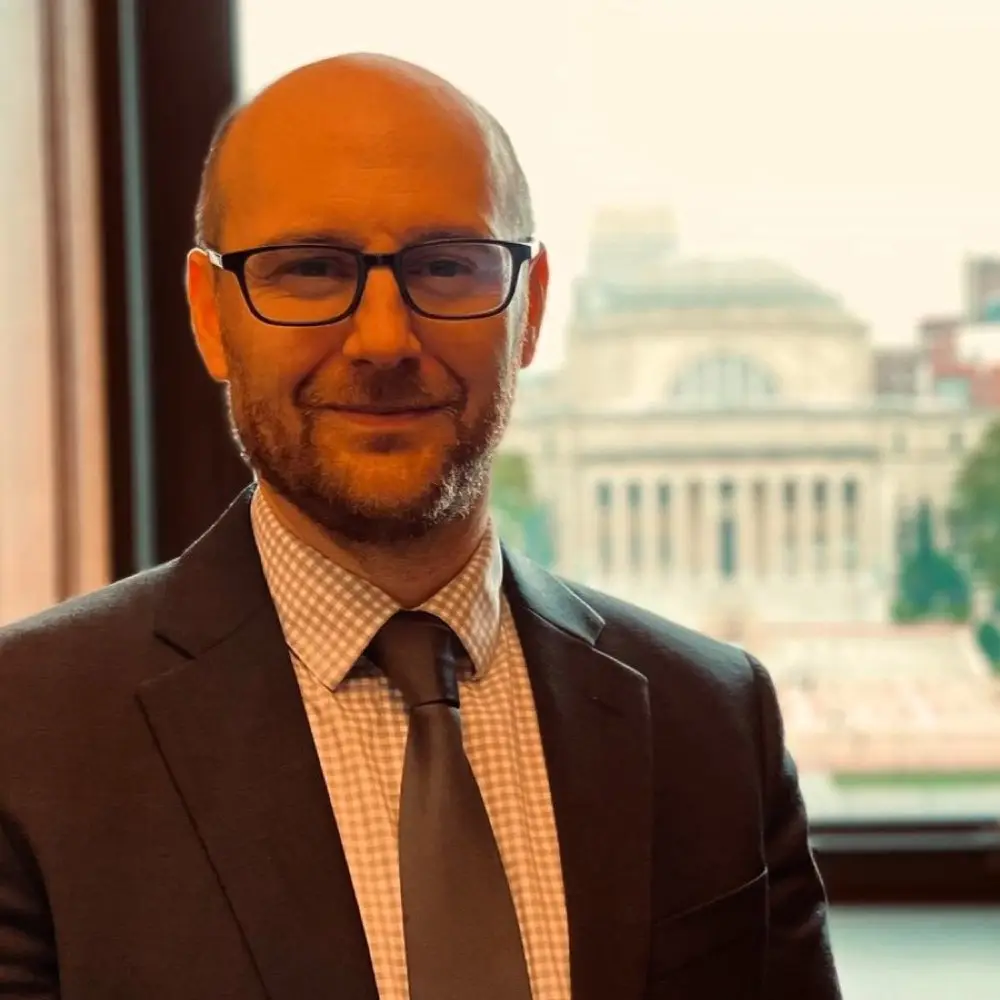


Bitescize is our series of interviews, where top academics and practitioners will be answering our questions on #BehavioralScience, #Misinformation and #StratComms 👀.
For the first Bitescize of the year, we talked to @janinatuuli who is an applied behavioural scientist working across a range of projects in the public and private sectors. Janina told us about her experience in the field and her broad range of interests, including how to combine #Behaviorchange frameworks with other disciplines.
Who are you?
I’m interested in helping people enhance their decision-making and impact through behavioural science. My work mainly involves providing behavioural science support on consultancy projects across public and private sectors, currently on a freelance basis. This includes systematically analysing challenges to identify desired behaviours, understanding the barriers hindering the target group from performing these behaviours and developing contextual solutions that meaningfully overcome these barriers. Outside of work, I enjoy spending time outdoors and being active, particularly hiking, tennis and walking my dog.
How did you get into Behavioural Science?
For me it started with the book Thinking, Fast and Slow by Daniel Kahneman. I first heard about it while studying A-level Economics and immediately bought it. Around that time I had a part-time job manning the turnstiles at a theme park which gave a lot of down time to chat with colleagues. I found myself drawn to regularly sharing the insights I learned from the book with my colleagues as I found them so fascinating – why do we often systematically make errors in our judgments? Why does the framing of choices make such a difference to our decisions? That’s when I realised I found something that sparked my interest in a unique way.
It was, however, my undergraduate placement year at GSK which really shifted my perspective, thanks to two incredibly inspiring behavioural scientists in the Behavioural Ethics team, Dr Amanda Bunten and Dr Matt Rand. Joining their behavioural science network and capability-building workshops made me realise that I wanted to focus on learning how to apply behavioural science to real-world issues. That placement had a big impact on me, and I decided to pursue a Master’s in Behaviour Change at UCL. The programme’s systematic, evidence-based and interdisciplinary approach to understanding behaviour and developing interventions drew me to it and continues to underpin my work today.
What are you working on right now?
Currently, I am providing support on a variety of projects, ranging from developing a behavioural science training programme for non-specialists to collaborating with researchers on academic papers. It is also a pleasure to be helping share career insights from practitioners and academics through the interview series ‘Insider Insights: Careers in Behavioural Science’, for students and recent graduates interested in careers in the field.
What do you like most about what you do?
My work offers an opportunity to work with diverse clients across sectors and apply behavioural science to a wide range of challenges. I enjoy how intellectually stretching this environment is but most of all I enjoy working within creative, communicative, quality-driven and teamwork-oriented teams. It’s incredibly fulfilling to work together to make a positive impact through the application of academic insights and methods and I consider the opportunity to work with people like them to be one of the greatest joys of my work.
What role is there for communications in changing behaviour?
To me, communications can serve like a GPS for behaviour change in the sense that it can guide people towards an action, explain the reasons behind it and encourage that important first step. I think coronavirus demonstrated to many of us how powerful a tool communications can be – trying to help someone to adopt a new behaviour, such as wearing a mask in social situations, we could just tell them what to do, but what if they don’t know why it is important, don’t believe it’s worth the effort or aren’t sure how to go about it? Communications had a huge role to play in building the knowledge, skills and motivation needed for behaviour change.
A guide that helped me understand how to practically apply behavioural science to communication campaigns is The Principles of Behaviour Change Communications – GCS.
Beyond this, many of us learn about the world from the people around us and historically stories have been a main way of sharing information. The power of storytelling as a method for driving behaviour change particularly fascinates me.
If you could work on / research any topic what would it be and why?
I am interested in leveraging behavioural insights to address challenges related to environmental sustainability. I am currently dipping my toes into a related space by contributing to academic papers examining how our relationship and interactions with nature relate to outcomes such as improved wellbeing and pro-environmental behaviours. With rapid urbanisation and environmental degradation, there are increasingly challenges related to environmental sustainability as well as human well-being so, while I am interested in applying behavioural science to a range of challenges, this is a “big question” topic where I would love to contribute understanding and solutions.
What is your favourite behavioural science paper/book/resource and why?
While the Behaviour Change Wheel guide by Dr. Lou Atkins, Prof. Robert West and Prof. Susan Michie was a foundational read that inspired me to pursue further academic study, since graduating I have been interested in is exploring how we can combine behavioural frameworks with other disciplines, such as service design, to generate a more thorough understanding of a problem space and design improved solutions. One paper in this area is ‘Align and Combine, Customer Journey Mapping and COM-B analysis to Aid Decision-making during the Design Process’ by Elizarova and Kahn (2018). It is a concise and accessible introduction to bridging behavioural science and service design.
Who do you think is interesting in the general field?
There are several people I find interesting, such as Katy Milkman, Amy Bucher and Aline Holzwarth. I can recommend the following sources, alongside this interview series, which help me learn about interesting people in the field:
- Bescy run regular online events dedicated to sharing insights, tools and strategies,
and connecting applied behavioural science enthusiasts and experts.
- Women in Behavioural Science who provide opportunities for knowledge sharing, skill development and connecting with others working in the field, regardless of gender.
- Money On The Mind – Merle van den Akker’s series interviewing prominent people in the field.
What haven’t we asked you that we should have?
Great question! Thinking back to a year ago when I was a student, I would have loved to ask my future self “What skills would be helpful to start developing now to prepare for working in an applied setting?”.
Who is one person that we can speak to for our next interview and if you could ask them one question, what would it be?
Based on his interview here, I would love to ask Steve Wendel “Where do you think the most promising opportunities are for combining behavioural science with systems analysis to address systemic issues?”